Greenhouse gases are molecules in the Earth’s atmosphere that trap heat from the sun and prevent it from escaping back into the atmosphere leading to a warming effect. The name greenhouse gas originated from a process observed in glass greenhouses where plants are grown. The glass lets heat into the greenhouse but does not let it escape. Greenhouse gasses trap heat produced by the sun and produce a warming effect on the earth’s surface.
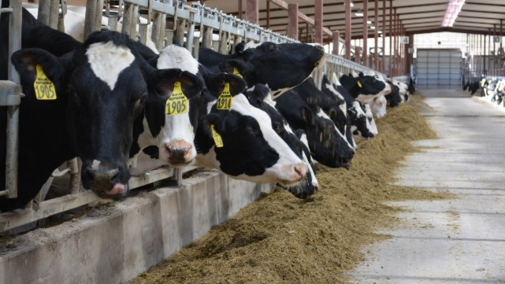
Ruminants like beef and dairy cattle, sheep, goats, deer, and other animals have a rumen, and the rumen contains microbes. Rumen fermentation is a process that converts ingested feeds into energy and protein sources for the animal to use. More specifically, microbes in the rumen take feed/food and break them down for the microbes to use and finally for the animal to use. When feeding ruminants, feeding microbes is important. The digestive process enables ruminant animals to eat plants that otherwise could not be digested. As a result of the rumen fermentation processes, methane is a byproduct. Methane is belched from the mouth of cattle into the atmosphere. Methane is one of the three major greenhouse gases.
Methane is also released into the atmosphere from lagoons. Lagoons in the feedlot collect and trap runoff from pens in a feedlot where cattle are fed. Methane is a byproduct of the breakdown of manure that is caught in lagoons.
Agriculture’s contribution to greenhouse gas emissions is about 10%. About 4% of the 10% is in the form of direct methane production, mostly from cattle. Methane from cattle accounts for 25% of the 11.2% of the methane in the atmosphere.
The atmospheric half-life of methane is about 9 to 12 years. This means that after approximately 9 to 12 years, half of the methane released into the atmosphere today will be removed by natural processes in 9 to 12 years. Methane has a much shorter lifespan in the atmosphere compared to carbon dioxide. Because methane is effective at trapping heat, small decreases in methane emissions can impact climate change.
The University of Nebraska will conduct research to determine possible strategies to economically mitigate methane production from beef and dairy cattle.