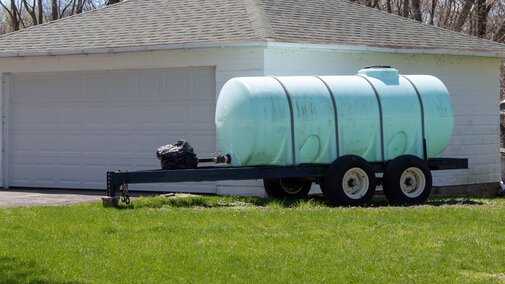
In emergencies—such as wildfires, floods, or other disasters—livestock are often displaced and left without access to clean drinking water. In these urgent situations, people understandably use whatever tankers, or tenders, are available to haul water. While this quick action can save livestock, unclean or contaminated tankers can also introduce serious risks or death in livestock.
One of the most significant dangers is nitrate poisoning, also called nitrate toxicosis, especially when tanks have been used to haul fertilizer. Even small amounts of residue left behind can contaminate water and pose a threat to animals.
Hauling water to livestock in tankers that have hauled fertilizer or other chemicals previously can kill numerous animals and kill them quickly. When it comes to nitrate poisoning specifically, ruminants are the most susceptible.
Best Practices for Emergency Water Hauling
Make every attempt to only use clean nurse tanks, also called liquid tender trailers or tankers. Use brand new or tankers that have never hauled fertilizer or pesticides.
It’s important to understand that once a tanker has been used for chemicals, such as fertilizers, you cannot fully eliminate nitrate residues. However, thorough rinsing can dilute the contamination, but there is still risks of toxicosis (death). In an emergency, you may be forced to haul water in tankers with unknown hauling history.
If you must use tankers with an unknown or known chemical-use history:
- Rinse the tanker as much as possible.
- Three full rinses should be considered minimum, and ideally with an additional surfactant.
- You cannot fully remove nitrate completely from a tanker, but the more you rinse and dilute, the chance of toxicosis is lessened. There are cases of nitrate poisoning in livestock even after tankers have been rinsed.
Clinical Signs of Nitrate Poisoning
Nitrate poisoning causes an inability to efficiently carry oxygen in the blood, resulting in low oxygen levels that can affect numerous organ systems. The clinical signs are not disease specific, but can include difficulty breathing, overall weakness or incoordination, frequent urination, and general anxious behavior, among others. Unfortunately, in many cases of accidental poisoning the only clinical sign is unexplained sudden death, and often in a large number of animals. Reach out to your local veterinarian immediately if you suspect accidental nitrate poisoning.
Bottom Line
In an emergency, every decision is made under pressure—but when it comes to hauling water for livestock, tanker safety should not be overlooked.