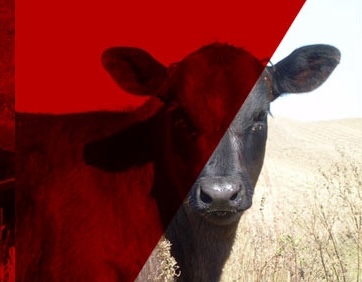
The old phrase, “horses for courses” now has a complementary phrase of “cows for resources.” Approximately 75% of the feed that goes towards producing a pound of beef comes from forage. Recent research at Oklahoma State University by Dr. David Lalman has shown that there are significant differences in how efficiently heifers convert forage to pounds of beef in a growing diet consisting of good quality hay. In a recent article titled “Finding Forage Efficient Heifers” in the December 15 issue of the Cow-Calf Corner Newsletter, Dr. Lalman shares groundbreaking research examining forage efficiency.
Research has been conducted for almost three decades, measuring individually how efficiently cattle convert feed into pounds of gain. The feed used in these research studies tends to be high quality, energy dense, and utilizes some grain as a part of the ration. What has not been studied is feed efficiency utilizing a medium to high quality, long stem grass hay which is more similar in type to what most beef cattle are expected to utilize through grazing.
The research results show tremendous variability in the performance of the weaned heifer calves utilized in this study. Average daily forage intake ranged from 9 to 19 pounds per head per day, while average daily gain ranges from a slight weight loss to a gain of 1.6 pounds per day. In the study, there are heifers that have an unacceptable rate of gain on the forage-based diet. There are also heifers that have moderate forage intake and acceptable to even exceptional levels of gain. There are also heifers that ate a lot but only had moderate levels of gain.
In a recent BeefWatch Podcast, https://go.unl.edu/heifer_forage_efficency, Dr. Lalman shares data that consistently shows there is statistically no correlation between feed efficiency on a long stem grass hay diet when compared to an energy dense diet that has a grain component. While there is a correlation of level of feed intake in individual cattle across these diets, there is no correlation in feed efficiency! This means that cattle that eat a lot when fed an energy dense diet are likely to eat a lot when fed a long stem grass hay diet. However, cattle that are identified as being efficient when fed an energy dense diet may not be efficient when fed a diet consisting of medium to high quality long stem grass.
These research results give food for thought for those selecting bulls to produce replacement heifers and when thinking about replacement heifer development systems. Sires that have genetics for increased levels of feed intake when compared to their contemporaries, will likely pass this trait on to their resulting heifer calves. However, sires that have been shown to be efficient at converting an energy dense diet to pounds of beef, may not sire heifers that are efficient at converting forage to pounds of beef.
In the BeefWatch podcast, Dr. Lalman shared some practical thoughts for cow-calf producers wanting to produce heifers that will efficiently convert forage to pounds of beef and fit available grazing resources.
- After weaning, conduct a forage test for heifers either through grazing a medium quality forage or through feeding of medium quality hay for a 60-to-90-day period. Heifers that perform acceptably in terms of average daily gain will likely be heifers that will make cows that will effectively utilize forage resources.
- Sires with genetic potential for high levels of feed intake will likely pass these traits on to their daughters. Selecting for higher levels of feed intake will eventually necessitate a decrease in stocking rate as the same size herd of cows will eat more.
- Sires that are efficient at converting high-quality energy dense diets to pounds of beef, may not sire heifers that are efficient at converting forage to pounds of beef. The data shows no correlation between feed efficiency on a high-quality energy dense diet and feed efficiency on a medium to high-quality long stem hay diet.
The primary feed resource for cattle is forage. The competitive advantage of cattle, when compared to poultry or pigs, is that they can harvest and convert forage into high-quality protein products. Utilizing selection tools and management practices that can identify forage efficient cattle will aid in developing cows that fit grazing resources and effectively convert forage into beef.