Since its introduction into the United States, the horn fly has become one of the most persistent and economically damaging pests affecting pasture-based livestock systems. For beef and dairy producers, horn flies are more than a nuisance, they contribute to measurable losses in weight gain, milk production, and overall animal performance.
The horn fly is considered the most important blood-feeding pest of pastured cattle in the U.S. When populations are high, cattle experience irritation and blood loss, leading to reduced average daily gain, decreased milk production, and altered grazing behavior. Research indicates horn flies can reduce calf weaning weights by 4–15% and stocker cattle or replacement heifers by up to 18%. In addition, horn flies are associated with the transmission of summer mastitis.
Identification and Behavior
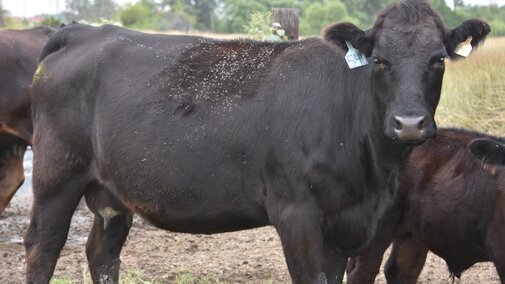
Horn flies are small, gray flies approximately half the size of a house fly (about 3/16 inch long). They are typically found clustered along the topline, shoulders, sides, and poll of cattle (Figure 1). During hot summer afternoons, they often move to the belly region where temperatures are cooler.
Unlike face flies or stable flies, horn flies remain on the host animal nearly continuously. Both sexes blood-feed, taking 20–30 (and often more) blood meals per day. As horn fly numbers increase, cattle exhibit fly defensive behaviors such as tail switching, head throwing, skin twitching, bunching, and seeking shade or water. These behaviors reflect irritation and stress and reduce grazing efficiency.
Life Cycle and Population Dynamics
The horn fly has a rapid life cycle, completing development in 10 to 20 days under favorable summer conditions. Females deposit eggs exclusively in fresh cattle manure, often within minutes of deposition. Larvae develop within the manure pat, pupate in the soil beneath it, and emerge as adults that quickly locate a host.
Because multiple generations occur throughout the grazing season, populations can increase rapidly if not properly managed. In Nebraska and much of the Great Plains, horn fly numbers typically begin increasing in late May or early June, peak during July and August, and may remain high into late August or early September.
Economic Threshold and Monitoring
Horn flies are the most economically damaging pasture fly in North America, with estimated annual losses exceeding $1 billion. The economic injury level (EIL) is approximately 200 flies per animal, and this threshold is often reached early in the grazing season.
Regular monitoring is critical for effective fly management. Cattle should be observed weekly throughout the fly season. The most accurate observations are obtained between 8:00 AM and 11:30 AM, when flies are typically located on the shoulders, topline, and sides of the animal. Later in the day, horn flies tend to move to the belly, making accurate assessment more difficult.
When evaluating horn fly populations on cattle, producers should also monitor animal behavior. Recording the number of head tosses per minute can serve as a useful indicator of fly-induced stress. If animals exceed 10 head tosses per minute, this suggests that fly pressure is high and cattle are experiencing stress. At this point, adjustments to the current fly control program or implementation of additional control measures are warranted.
Control Methods and Management Options
Effective horn fly control requires a combination of strategies within an Integrated Pest Management (IPM) program.
Control Methods
Self-Applicating Devices and Walk-through Fly Trap
- Dust Bags: Provide 80–90% control when used in forced-use systems (e.g., at water or mineral sites). Free-choice use is less effective.
- Backrubbers and Oilers: Work best when placed in forced-use locations and require regular recharging with insecticide.
- Bruce Walk-through trap: Reduce adult populations without insecticides but require a cattle acclimation period. For trap blueprints contact: dboxler1@unl.edu
Other Methods
- Sprays: Provide 7–14 days of control and require thorough coverage and repeated applications.
- Pour-ons: Typically provide 7–21 days of control. Systemic products (endectocides) may impact beneficial insects such as dung beetles.
- Insecticide Ear Tags: Offer season-long control when applied at the correct time (late May to early June). Two tags per adult animal generally provide optimal control.
- Compressed Air Application: Capsule-based systems can provide 21–35 days of control.
Larval Control
- Feed-through Insect Growth Regulators (IGRs): Prevent larval development in manure but do not control adult flies. Consistent consumption across the herd is essential, and effectiveness can be reduced by fly migration from neighboring herds. Must start feeding 30 days prior to fly season.
Biological Control
- Natural enemies such as dung beetles and other dung inhabiting beetles can contribute to suppression. Preserving these beneficial organisms is important when selecting insecticides.
Insecticide Resistance and IRM Strategies
Resistance to commonly used insecticides, including pyrethroids (Group 3A) and organophosphates (Group 1B), has been documented in many regions. Repeated use of the same mode of action accelerates resistance development.
The Insecticide Resistance Action Committee (IRAC) classifies insecticides by mode of action (MoA). Products within the same group act similarly, even if marketed under different brand names. To slow resistance development:
- Rotate insecticides among different IRAC numbered groups annually
- Avoid underapplication when using pour-on products
- Treat only when economic thresholds are reached
- Remove ear tags at the end of the season
- Follow the label instructions regarding the application of control products
Integrated Management Approach
A proactive, threshold-based IPM program is essential for long-term horn fly control. This includes:
- Regular monitoring of fly populations
- Timely application of control measures at threshold levels
- Strategic rotation of insecticides
- Integration of mechanical and biological control methods
This approach reduces unnecessary insecticide use, slows resistance development, and improves sustainability.
Bottom Line
The horn fly remains the most economically significant pasture fly affecting cattle in North America. Producers who understand its biology and implement an integrated, data-driven management strategy will be better positioned to protect herd performance, reduce stress on animals, and maintain profitability.