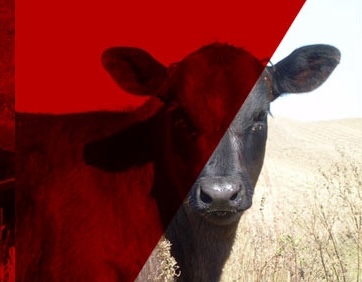
When grass is limited and/or cow body condition needs to improve, early weaning may be a viable option for cow-calf producers. Weaning removes any grazing pressure from the calf and removes milk production from the cow’s nutritional requirements, reducing her dry matter intake by 20%.
How early can calves be weaned? While calves have been shown to be weaned successfully as early as 45 days, keep in mind the rumen development of young calves will influence the weaning process. Around 85-90 days of age the calf’s rumen is developed enough to be considered a ruminant rather than a pre-ruminant. For this reason, waiting until 100 days of age to wean may provide an easier transition to the weaning diet. At this age, a calf consumes 1.5 to 2.0% of their body weight on a dry matter basis. Once milk consumption is removed, the calf will eat 2.3-2.5% of their BW on a dry matter basis. The diet fed must be highly digestible to promote high passage rate and feed intake to accommodate an early-weaned calf’s small rumen.
Early weaned calves require increased labor, particularly for daily feeding and close monitoring of intake and health to prevent problems early.
Preparing calves for early weaning may include introducing them to new feeds, feed bunks and/or different watering systems while still with the cow. Fermented feeds such as silage can be unpalatable if unfamiliar prior to weaning. Will the weaning facility allow lighter-weight calves to access feed and water easily? Early weaned calves should have at least 12 inches of bunk space. Work with your veterinarian to determine what pre-conditioning or preparation should be completed prior to weaning as well as developing a plan to manage any outbreaks of illness following weaning.
Separating cows from calves should be done with as little stress as possible. If facilities can manage it, consider variations of fenceline weaning or two-step weaning compared to abrupt weaning.
Early weaned calves are efficient and can gain well (2.5-3.0 lb/d) when provided a consistent, highly digestible diet. Focusing on rumen undegradable protein helps calves gain muscle and bone structure as they grow. Early weaned calves need to be able to eat small amounts frequently due to their small rumen. Deliver feed on a consistent schedule to ensure availability and to maintain intake and performance. Save low quality feeds for more mature members of the cowherd. Keep in mind that a calf growing that rapidly will need an increase frequently in the amount of feed provided to maintain that level of gain. For example, a 350-lb calf gaining 2.5 lb/d is now a 425-lb calf within a month. Many producers who wean calves and hold them for 60-90 days before selling often target 1.5 lb/d gain. However, the early weaned calf is smaller and needs to make up skeletal and muscle growth and therefore, will likely need to gain at least 2.0 lb/d.
While lighter-weight calves often bring premium prices per pound, total revenue may be lower than selling heavier calves. Producers should compare the value of added gain to the costs of feed, labor, yardage, and health management before deciding to grow early weaned calves to heavier weights. Marketing plans will vary depending on each operation’s resources, but the decision often hinges on whether the cost of gain is lower than the market value of added weight.
Early weaning is a drought management strategy that protects cows but requires strong calf management.