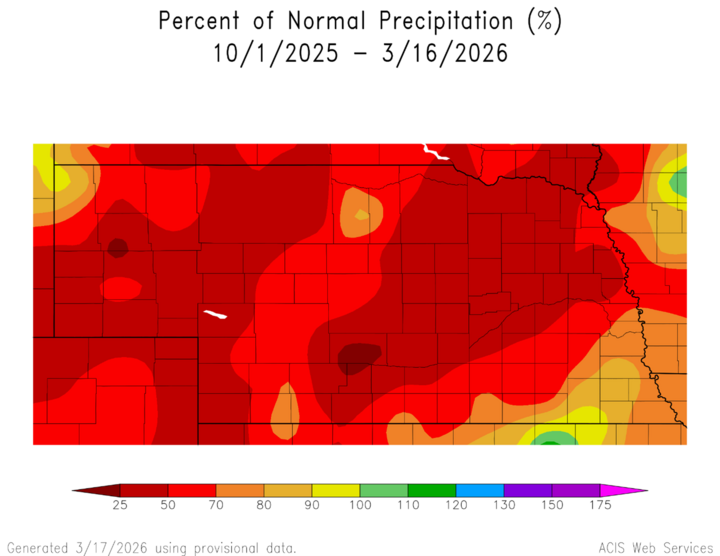
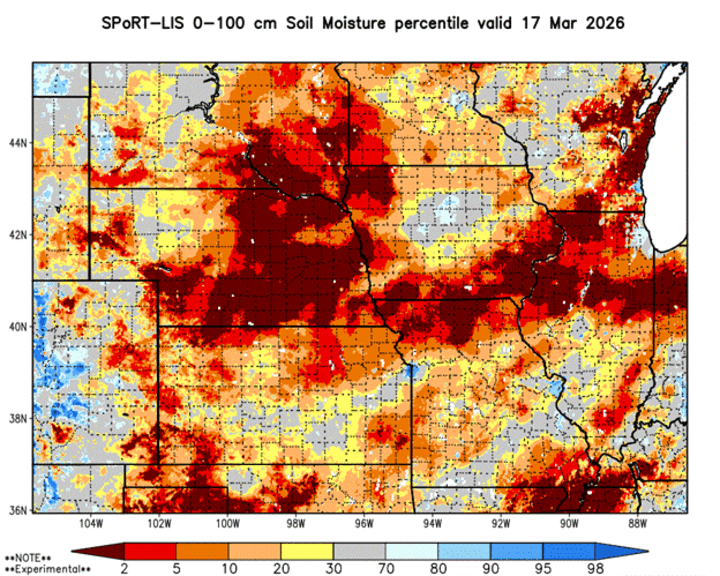
The 2025 grazing season ended dry, and little moisture since then, combined with warm temperatures and wind throughout the winter, has depleted soil moisture conditions for much of Nebraska. National Weather Service forecasts indicate a warmer and dryer than normal spring for Nebraska, making drought planning for the 2026 growing season essential. (See Figures 1-3). Spring precipitation will be necessary to replenish soil moisture for cool-season grass growth.
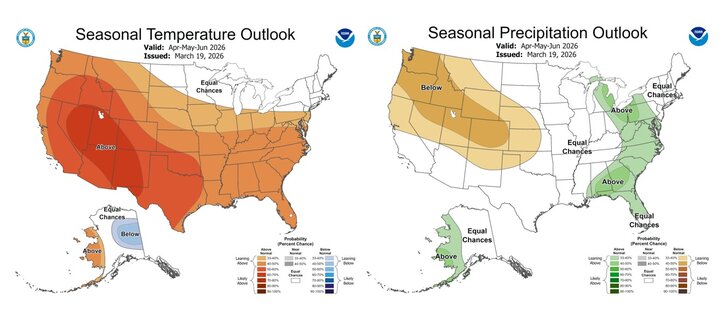
Pasture and native rangeland forage production fluctuates greatly from year to year based on precipitation, temperature, range health, and soil nutrients. The amount and timing of spring and early summer precipitation is an important factor in determining annual plant production. Using critical trigger dates can help producers adjust stocking rates if precipitation, and the resulting forage production, is expected to be below average. Trigger dates will vary depending on the dominant forage species in a pasture.
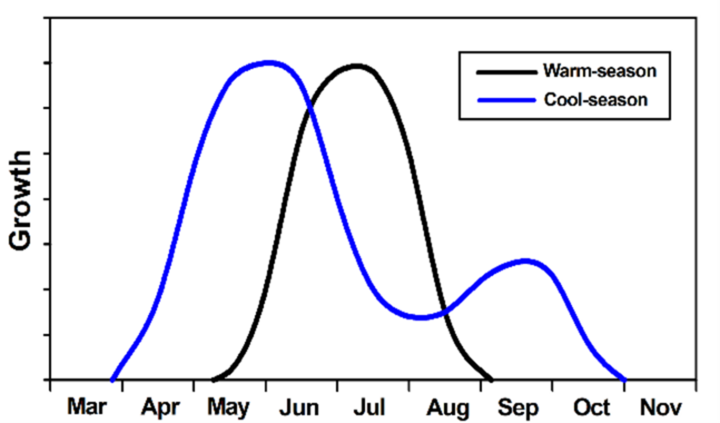
Available soil moisture drives plant growth. Both cool- and warm-season grass species have rapid-growth windows where optimum air temperature, day length, and soil moisture must be present for plants to fully express growth potential. Once that window of opportunity closes for a particular grass species, it is often too late to get significant growth, even if it does rain. For example, cool-season grasses produce most of their growth in the early summer, whereas warm-season grasses grow later in the growing season.
In the Sandhills, May through July precipitation is strongly correlated with total warm-season forage production. In the Panhandle, where many range sites are dominated by cool-season grass plants, forage production is most influenced by April through June precipitation. This same window applies to smooth bromegrass pastures, a cool-season grass more common in Eastern Nebraska. Smooth bromegrass is a sod-forming grass and can be very drought tolerant. Many cool-season smooth bromegrass pastures often grow again in the late summer and early fall as days shorten and nights cool (Figure 4).
Lack of precipitation will limit forage growth and grass available for livestock. With reduced forage resources expect to lower the stocking rate during the grazing season. Stocking rate is the number of animals on a given piece of land over a certain period. Stocking rates can be adjusted by shortening grazing periods or reducing cattle numbers.
Suggested Trigger Dates
Trigger dates for an operation will depend on the grass species present and available grazing resources. Here are some key trigger dates to consider for western Nebraska cool- and warm- season dominated range sites.
- April 1. Review precipitation from the previous growing season and dormant season (October – March). Digging post holes can be a good test to see how much moisture is in the soil profile. Low soil moisture in early April will impact growth from cool-season grass species such as Threadleaf sedge (blackroot) and Needlegrasses. With exceptionally dry conditions at this time, and forecasts for drier than normal May and June precipitation, consider reducing stocking rates 10-20% on cool-season dominated rangeland.
- April 15 to May 10. Thirty- to 45-day precipitation forecasts become more reliable during this window. If above average temperatures with average to below average precipitation is predicted, additional reductions in stocking rates should be considered. In smooth bromegrass pastures with below average March through May precipitation, annual production may be reduced 25-50%.
- May 20 to June 10. Needlegrasses will be completing their forage production and western wheatgrass is in its rapid growth window. If March-May precipitation was 50-75% of the long-term average, reduce stocking rates 30-40% or more, depending on grass species and plant health. Warm-season grasses such as prairie sandreed and little bluestem are just starting to grow.
- June 15 to June 30. Approximately 75 to 90% of grass growth on cool-season dominated range sites and 50% of grass growth on warm-season dominated range sites will have occurred. Rainfall after this point provides limited benefit to cool-season grasses but can still benefit warm-season grasses.
- June 15 to July 15. Precipitation and available soil moisture remain important for warm-season grass growth.
- July 15. Precipitation after this date will have limited benefit to warm-season tallgrass production, though shortgrass warm-season species such as buffalograss and blue grama can still respond with some forage growth.
- September 1 to September 15. Smooth bromegrass and other cool-season dominated pastures need adequate precipitation by these dates to produce enough fall forage for grazing.
View our 2025 webinar- click 2025 Drought Planning: Trigger Dates for Pasture and Forage Management.
Resources
- The National Weather Service Climate Prediction Center provides short- and long-term precipitation and temperature forecasts.
- The NebGuide, Skillful Grazing Management on Semiarid Rangelands, covers grass growth patterns and grazing management practices for Nebraska producers.
- The National Drought Mitigation Center offers drought resources including Managing Drought Risk on the Ranch, a practical, in-depth planning guide with additional trigger date information.
Contact your local Nebraska Extension Livestock Systems Educator for additional drought planning information specific to your area.
Article by Ryan Benjamin and TL Meyer, Nebraska Extension Livestock Systems Educators.
Topics covered:
Pasture & range, Grazing systems & best practices, Weather, Drought